Buying in Union County often comes down to one practical question: Should you focus on Linden or Elizabeth? If you are weighing both cities, you are not alone. They sit close to each other, serve many of the same commuters, and offer very different housing experiences. This guide breaks down the key differences in prices, housing stock, commuting, and day-to-day fit so you can make a smarter move with more confidence. Let’s dive in.
Linden vs. Elizabeth at a Glance
For many buyers, the biggest surprise is how close the pricing is. Zillow’s April 2026 snapshot puts typical home values at $547,214 in Linden and $531,592 in Elizabeth, a difference of just $15,622. Median list prices are also close, with Linden at $553,333 and Elizabeth at $558,483.
That means this is not a simple story of one city being clearly cheap and the other clearly expensive. Instead, the better way to compare them is by what kind of housing you get, how each city feels in daily life, and how each market lines up with your goals.
Home Prices and Affordability
Prices Are Close
If you are looking only at current home values, Linden and Elizabeth are in a similar range. Linden comes in slightly higher on Zillow’s market-value index, but the gap is modest. In real-world terms, many buyers could reasonably search in both cities depending on property type and condition.
It is also worth noting that Zillow’s home-value index and median list price measure different things. That is why Linden can show a slightly higher typical home value while Elizabeth shows a slightly higher median list price. If you are shopping seriously, you should compare actual active listings and recent comparable sales, not just one headline number.
Income Context Looks Different
Even though pricing is fairly close, the income backdrop is not. ACS-based city profiles show a median household income of $92,915 in Linden compared with $66,555 in Elizabeth. That helps explain why the two markets can feel different even when home prices are not far apart.
In practical terms, Linden reads more like a higher-income owner-occupied market, while Elizabeth reflects a more mixed housing environment. For you as a buyer, that does not make one city better than the other. It simply means your experience in the market may vary based on the kind of property and neighborhood setting you want.
Rents Are Lower in Elizabeth
If you are deciding whether to keep renting a little longer, or if you are considering a multi-family purchase, rent matters. Median gross rent is $1,731 in Linden and $1,523 in Elizabeth based on ACS-based profiles. That gives Elizabeth an edge for buyers who are also thinking about rental affordability or rental demand.
This can be especially useful if you are considering a property with more than one unit. Lower rents do not tell the whole story, but they are an important part of how each city functions as a housing market.
Housing Stock Matters Most
Linden Has More Detached Homes
The clearest difference between these two cities is the housing stock. In Linden, 45.2% of the housing stock is detached single-family, and 26.0% is two-unit housing. Overall, 59.5% of homes are owner-occupied.
That matters if your wish list includes things like a private yard, a driveway, garage parking, or a more traditional detached-home setup. Linden’s housing mix is more closely aligned with those priorities, which is why many buyers looking for owner-occupied space naturally focus there.
Elizabeth Has More Multifamily Options
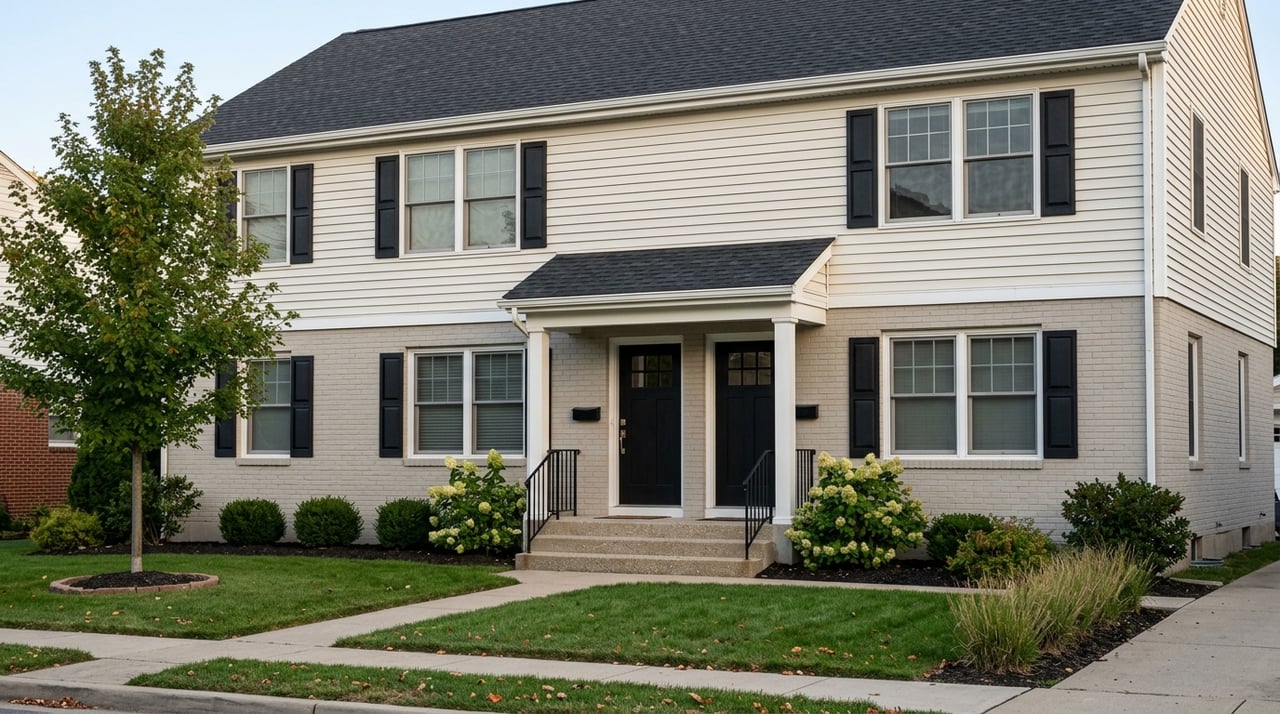
Elizabeth has a much denser housing profile. Its housing stock includes 13.8% detached single-family, 31.6% two-unit, and 15.8% three- or four-unit housing. Overall, 74.4% of homes are renter-occupied.
For buyers, that often means more multifamily options and a stronger rental ecosystem. If you are an owner-occupant looking for a 2 to 4 family property, or an investor watching Union County closely, Elizabeth may offer more of the inventory type you want.
Both Cities Are Established Markets
Both cities have a median construction year of 1957, which tells you these are established housing markets rather than large-scale new construction markets. That can mean mature streetscapes, older layouts, and homes that vary widely in updates and condition.
For you, this means inspections, repair planning, and realistic expectations matter. Two homes with similar list prices can offer very different long-term value depending on maintenance, improvements, and overall configuration.
Which City Fits Your Buying Goals?
Choose Linden for More Owner-Occupied Feel
Linden tends to fit buyers who want a more detached-home-oriented market. If you are hoping for more space around the home, more owner-occupied housing, and a market that leans residential while still staying connected to major transportation routes, Linden may feel more comfortable.
That does not mean every property in Linden will match that picture. It means the city’s overall structure mix supports that kind of search more often than Elizabeth does.
Choose Elizabeth for Multifamily Flexibility
Elizabeth may be the stronger fit if you want more multifamily choice or you are open to a denser urban environment. The city’s housing mix supports buyers looking at 2 to 4 family properties, buyers who want more rental-oriented housing around them, and buyers who value a broader transit network.
This is one reason Elizabeth often appeals to both first-time buyers and smaller investors. The property types available there can create more ways to approach ownership, especially if you are open to shared walls, multiple units, or a more active city setting.
Commute and Transit Comparison
Elizabeth Has a Shorter Average Commute
Commute time can shape your daily quality of life as much as the home itself. ACS-based profiles show an average commute of 27 minutes in Elizabeth compared with 32 minutes in Linden. That five-minute difference may not sound major at first, but it adds up over time.
For buyers trying to balance housing costs, work access, and daily convenience, Elizabeth has a slight edge here. It also shows a higher share of bus and subway use, which supports its more transit-oriented profile.
Both Cities Have Rail Access
Both Linden and Elizabeth are connected by NJ TRANSIT rail service. NJ TRANSIT lists Linden Station on the Northeast Corridor and North Jersey Coast Line. Elizabeth is served by Elizabeth Station on those same lines, and NJ TRANSIT also lists North Elizabeth Station.
That gives both cities solid rail access for regional commuting. Still, Elizabeth’s two train stations and broader bus network make it a little more flexible for buyers who depend on transit.
Driving vs. Transit Feel
Linden shows a stronger car share and somewhat stronger rail share, while Elizabeth is more transit-oriented overall. If you drive most places and want direct access to major roads, Linden may line up better with your routine. If you want more options beyond driving, Elizabeth may feel more convenient.
This is one of those differences that becomes more important after you move in. The right answer depends on how you actually live from Monday through Friday, not just what sounds good during a home search.
Lifestyle and Market Character
Elizabeth Feels Bigger and Denser
Elizabeth is the larger city by population, with 137,302 residents compared with 44,192 in Linden. Union County describes Elizabeth as a major commerce and transportation center, with assets that include the Port of Elizabeth, Newark Liberty International Airport’s Terminal A, historic Midtown, the Mills at Jersey Gardens, and parks such as Warinanco Park.
For you, that can translate into a busier, denser, more urban-feeling environment. Some buyers want that energy and convenience. Others prefer a quieter setup with a different residential balance.
Linden Offers a Different Balance
Union County describes Linden as an industrial city with its own airport, direct access to major roads, a downtown train station on the Northeast Corridor, Transit Village status, and parks including Hawk Rise Sanctuary. That points to a city with a strong commuter role and an established residential base.
If you want a market that feels more suburban in its housing mix while still staying well connected, Linden may be the better fit. Again, this is less about good or bad and more about matching the city to your priorities.
How to Decide Between Linden and Elizabeth
If you are torn between the two, keep your decision process simple. Focus on the things that will affect your daily life and long-term comfort the most.
Ask yourself:
- Do you want a detached home, or are you open to multifamily living?
- Is your priority more yard and parking space, or more transit flexibility?
- Are you buying as a primary residence, an owner-occupied multi-family, or an investment?
- How important is a shorter average commute?
- Would you rather search in a more owner-occupied setting or a denser rental-oriented market?
These questions usually narrow the answer faster than broad city comparisons do. Once your priorities are clear, the right market often becomes obvious.
Final Takeaway for Union County Buyers
Linden and Elizabeth are closer in price than many buyers expect, but they serve different needs. Linden is generally the better fit if you want more detached-home inventory, more owner-occupied housing, and a market that leans more residential in structure. Elizabeth is generally the better fit if you want more multifamily inventory, lower rents, and a more transit-oriented urban setup.
If you are buying in Union County, the best move is not choosing the city with the best reputation or the loudest buzz. It is choosing the city that fits how you plan to live, commute, and build value over time. If you want direct, local guidance as you compare options in Elizabeth, Linden, and nearby markets, connect with Pedro Oliveira.
FAQs
How do Linden and Elizabeth home prices compare for Union County buyers?
- Zillow’s April 2026 snapshot shows typical home values at $547,214 in Linden and $531,592 in Elizabeth, so the pricing is fairly close.
Is Linden or Elizabeth better for buying a single-family home?
- Linden has a much larger share of detached single-family housing, so it is usually the better fit if you want that type of property.
Is Elizabeth or Linden better for buying a multifamily property?
- Elizabeth has a denser housing mix with more two-unit and three- or four-unit properties, which gives buyers more multifamily options.
Which city has better transit access for Union County commuters?
- Both cities have NJ TRANSIT rail service, but Elizabeth has two train stations, a broader bus network, and a shorter average commute based on ACS-based profiles.
Are rents lower in Linden or Elizabeth?
- ACS-based city profiles show lower median gross rent in Elizabeth at $1,523 versus $1,731 in Linden.
Which city feels more urban for homebuyers, Linden or Elizabeth?
- Elizabeth is the larger and denser city, while Linden generally offers a more detached-home and residential-oriented housing mix.